Fixed offshore
Arup
15 MW reference turbine on a fixed monopile. Structural assessment of the load path and its effect on the tower.
Third-party engineering review of the CLS Wind system's loads and structures, an ABS Approval in Principle, and site-specific designs delivered against the platforms most operators are running today.
Third-party load models
2
Arup · Kent Engineering
ABS Approval in Principle
15 MW
Issued May 2024
Site-specific onshore designs
3
Siemens Gamesa · Vestas · GE Vernova
Fixed offshore
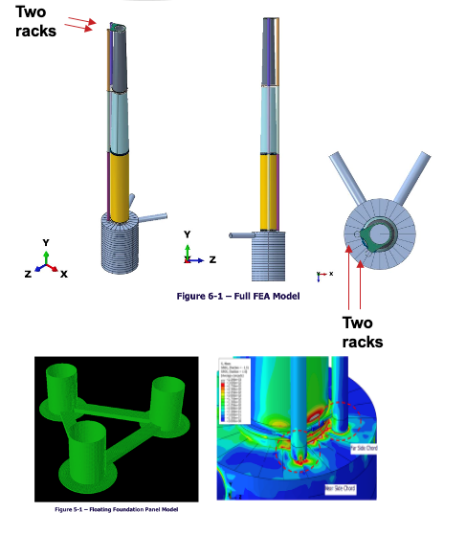
15 MW reference turbine on a fixed monopile. Structural assessment of the load path and its effect on the tower.
Floating offshore
15 MW three-column semi-submersible. Loading, fit, load transfer, and wind effects.
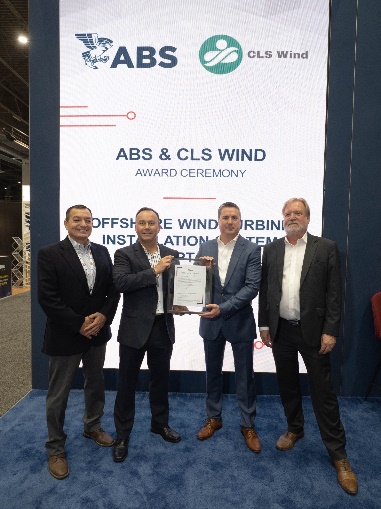
The American Bureau of Shipping issued Approval in Principle for the CLS Wind offshore wind turbine installation system concept design for 15 MW offshore wind turbines on 2 May 2024, after roughly nine months of review. ABS is one of the world's leading maritime classification societies.
01
2.7 MW
Siemens Gamesa
02
4.2 MW
Vestas
03
6.1 MW
GE Vernova
Offshore wind developers have provided written letters of support for the CLS Wind platform, alongside letters from engineering, port and industry partners. We do not publish their names here without express permission. Letters of support are available on request as part of a commercial conversation.
Patent position: five patent families, pending in eleven jurisdictions including Europe. First US patent allowed.
A comparable onshore tower-climbing system ceased operations in the fourth quarter of 2025. The technical and financial pressures that ended that program are addressed in the CLS Wind design by three deliberate choices.
01
Lift loads route through structural chords into the foundation, monopile, or floater rather than the tower, which removes the structural risk and weight constraints inherent to tower-climbing approaches.
02
A trained operator runs each lift with real-time sensor feedback on connection, vibration, and speed. The platform is not autonomous, and it is not asking the operator to trust a black box.
03
The platform is built on more than 70 years of oil and gas jack-up engineering. The fastening and connection systems are drawn from offshore marine heavy-pulling practice, not invented from scratch.
Validation is what carries a wind installation system from a clever idea into a deployable asset. The work above is what gives operators, OEMs, and developers the basis to take the next step with us.